Researchers from SUNY Oswego's Aquatic Conservation Laboratory are collaborating with the St. Lawrence Eastern Lake Ontario Partnership for Regional Invasive Species Management (SLELO PRISM) to monitor and detect invasive species in the Lake Ontario watershed using environmental DNA (eDNA) technology. Seperately, Spencer Alascio of the Saint Regis Mohawk Tribe studied this technology's application with measuring populations of marine spawning habitats. He discovered it's function to be not only effective, but also more efficient and humane that prexisting methods of survey.
Oswego's project is supported by a $10,000 award from The Nature Conservancy for its work on identifying non-native species that rapidly colonize and permanently alter aquatic communities, such as those in the Great Lakes region. Using eDNA, researchers can detect these species far sooner than traditional "fish-in–hand" surveys, enabling earlier action to contain or prevent their spread.
The Saint Regis Mohawk Tribe's project is funded through the Great Lakes Restoration Initiative and a partnership with the US Geological Survey and the SUNY Research Foundation. As mentioned above, the "contact-free" nature of this method of surveillance rapidly improves the effectiveness, humanity, and accuracy of data-- aiding present and future scientists in the fight for our native fish species.
How eDNA technology Helps Protect Great Lakes Ecosystems
Environmental DNA is genetic material that organisms leave behind in their environment. For aquatic species, this means scientists can collect a simple water sample and screen it for DNA from fish, invertebrates, or even bacteria. The approach functions like forensic science for ecosystems — as long as researchers find a genetic footprint, they know the species is present.
Traditional methods for detecting invasive species often rely on visible observations or physically capturing the organism, which can only occur after a population has already established itself. eDNA provides an early warning system, allowing action to prevent further spread.
Invasive species pose a significant threat to the ecological balance of the Great Lakes region, outcompeting native fish, disrupting food webs and, in some cases, preying on valuable species. Widely considered one of the most invaded freshwater systems in the world, the Great Lakes now face continual pressure from new and established invasive species. The economic impact is also substantial, putting the region's multibillion-dollar fishing industry and local economies at risk.
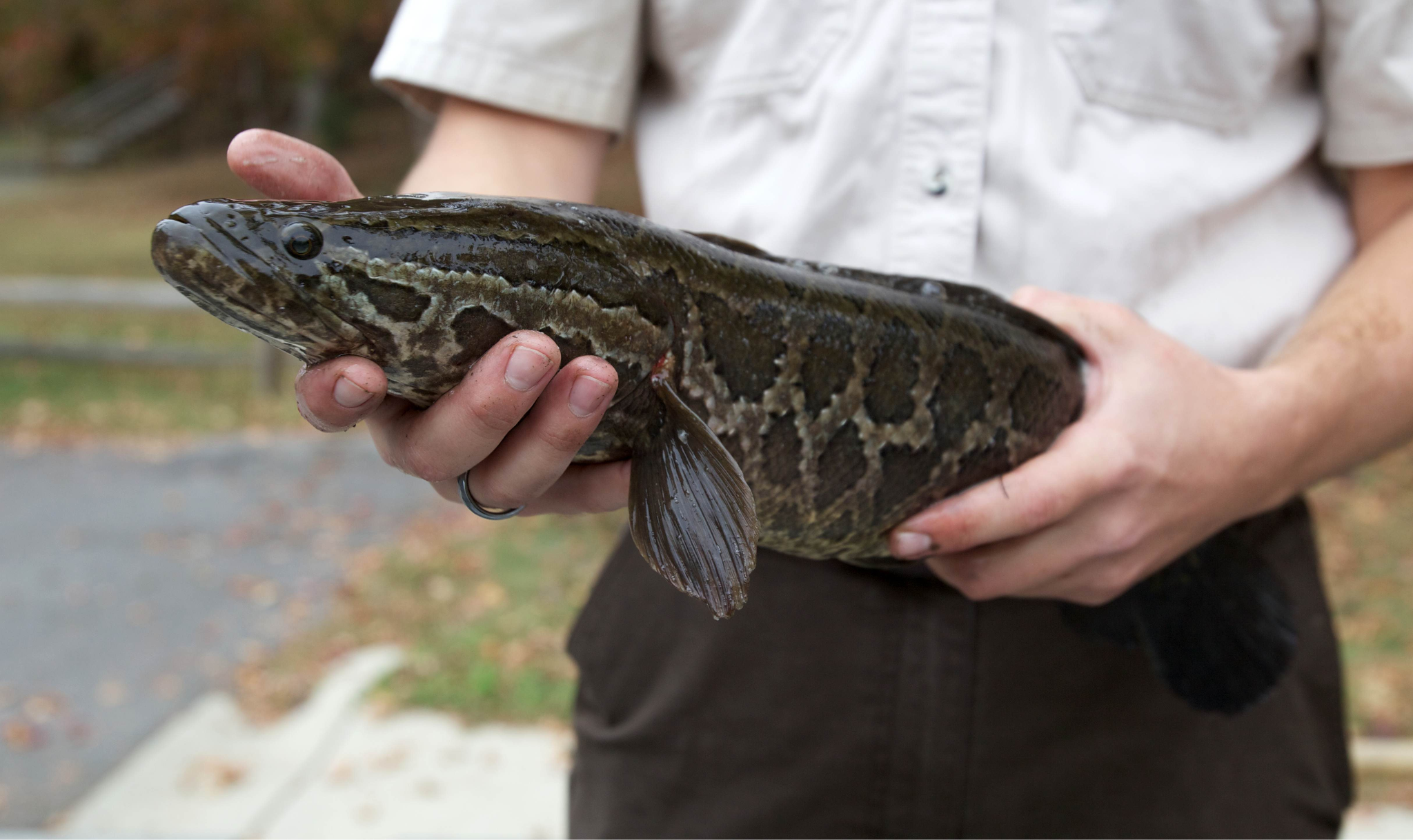
Oswego's project is currently screening for nine invasive species known to affect the region: rusty crayfish, bighead carp, silver carp, northern snakehead, tench, round goby, tubenose goby, hydrilla and Eurasian watermilfoil. Once a positive detection occurs, response efforts can include targeted field surveys, physical removal or other containment efforts.
How eDNA is Being Used to Measure Populations of Walleye Spawning Sites.
In addition to monitoring invasive sepecies, the SRMT have taken to monitoring the population of Walleye breeding grounds. According to Spencer Alascio's account, "Studies have shown a reliable relationship between the quanitity of eDNA in a region and the approximate size of a given population", he and his team studied ways to optimally detect walleye eDNA, the presence of important and endangered native fish species as a bonus.
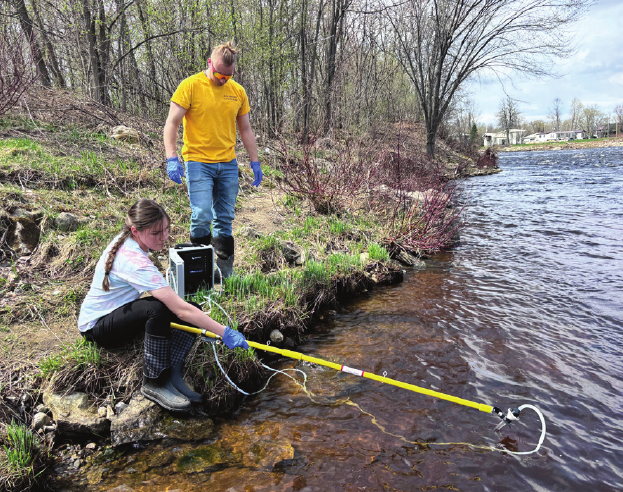
The discoveries by the SRMT have already identified some traces of Round Goby--an invasive species, in addition to some threatened species-- Lake Sturgeon and American Eel-- confirming the usefulness of the eDNA sampling method (described in the article cited above).
Ongoing Surveillance and Collaboration
The Oswego researchers' project represents an ongoing surveillance effort throughout the Lake Ontario watershed. The Aquatic Conservation Lab at SUNY Oswego continues to process water samples collected by SLELO PRISM from key sites throughout the region, refining laboratory techniques to detect more species with greater speed and accuracy.
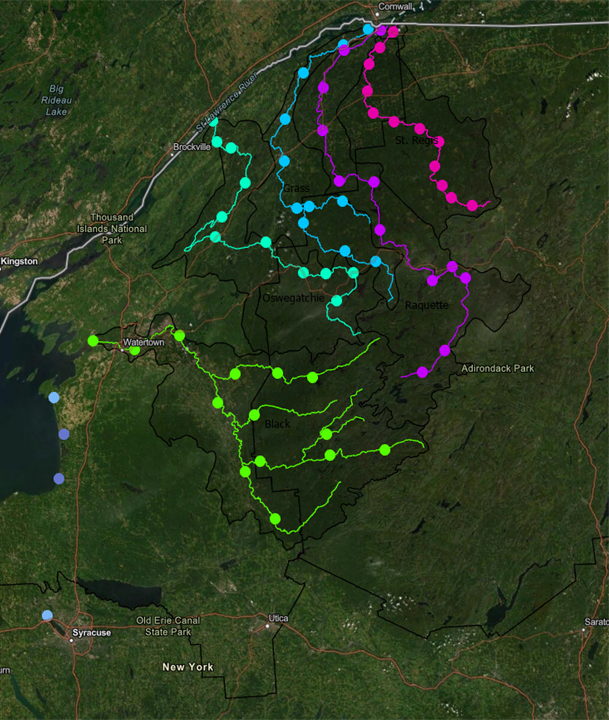
The Oswego team hopes that their work helps establish a permanent, large-scale early warning system for newly established invasive species populations in the Great Lakes, making eDNA monitoring a staple for environmental management. Meanwhile, the Spencer and his teams' work may revolutionize the current method of fish surveillance, birthing a new era of aquatic surveillance, and opening the door for countless applications for software automation.