Chloe Wang (she/her) is a second-year Master of Science student in the Department of Environmental Biology at SUNY ESF. She is a member of the CHAOS Lab at ESF and is collaborating with SOAC on her thesis research.
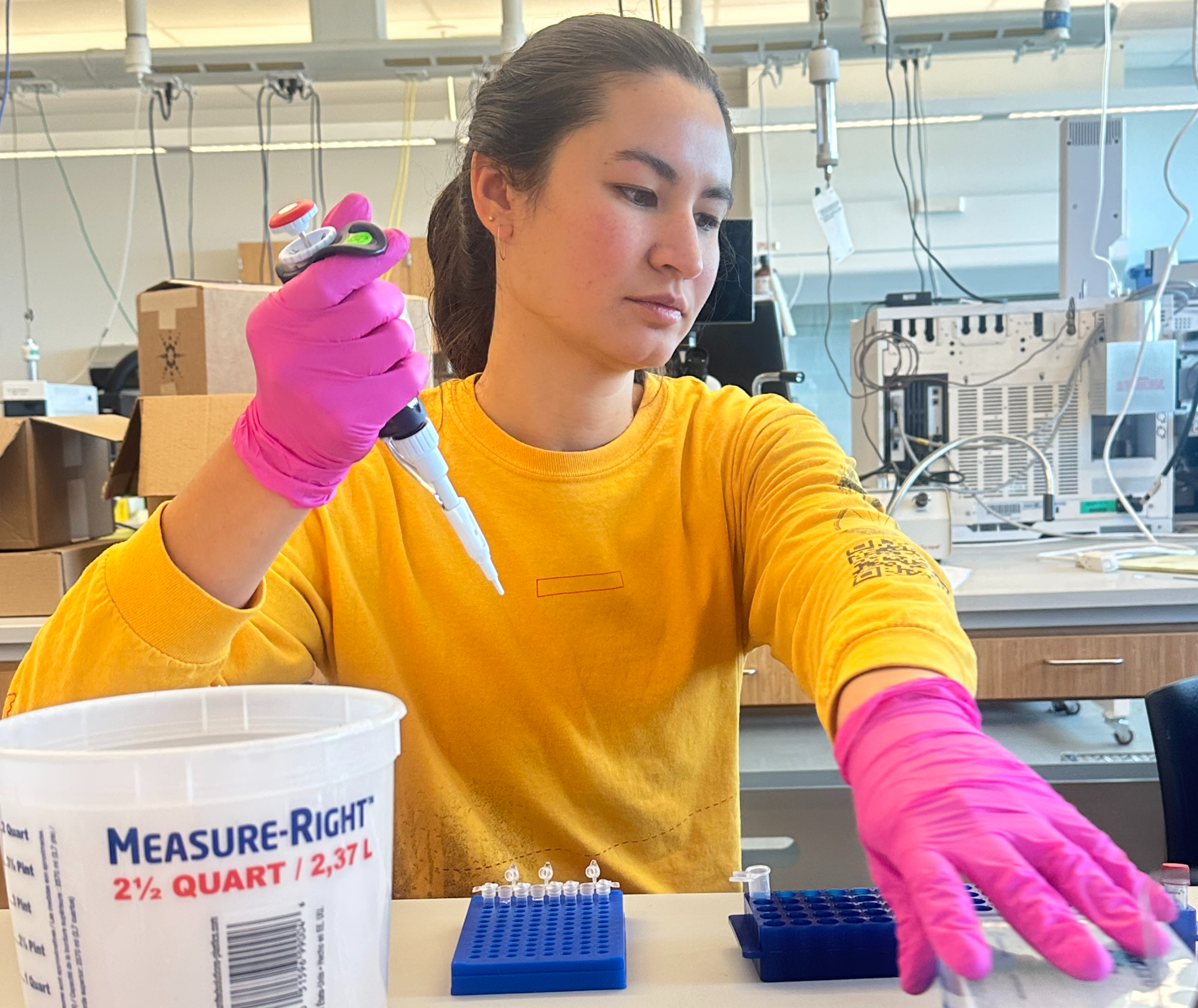
Her study explores the restoration potential of native Brook Trout (Salvelinus fontinalis) in the upper Onondaga Creek watershed, on land recently repossessed by the Onondaga Nation. This project is part of an ongoing, shared research agenda between the Onondaga Nation and the Center for Native Peoples and the Environment at ESF.
Why This Matters
Brook Trout are a sensitive species, imperiled throughout their native range by a host of changing environmental conditions. Small populations are still present in the Onondaga Creek headwaters, and the ultimate goal of Chloe’s work is to help these populations grow. She is collaborating with the Sard Lab to gain insight into the genetic origins of these Brook Trout whether they are hatchery strains from past stocking, native to the watershed, or hybrids of the two which speaks to their resilience.
"Brook Trout are a sensitive species, imperiled throughout their native range by a host of changing environmental conditions. Small populations are still present in the Onondaga Creek headwaters, and our ultimate goal is to help these populations grow. We are collaborating with the Sard Lab to gain insight into the genetic origins of these Brook Trout - whether they are hatchery strains from past stocking, native to the watershed, or hybrids of the two - which speaks to their resilience. Over the summer, I collected tissue samples from Brook Trout in the study area, using a nonlethal method: I took small clippings of fins that will regrow, kind of like fingernails. Over the past couple weeks, Vinnie guided me through the process of extracting DNA from these samples and preparing it for sequencing."
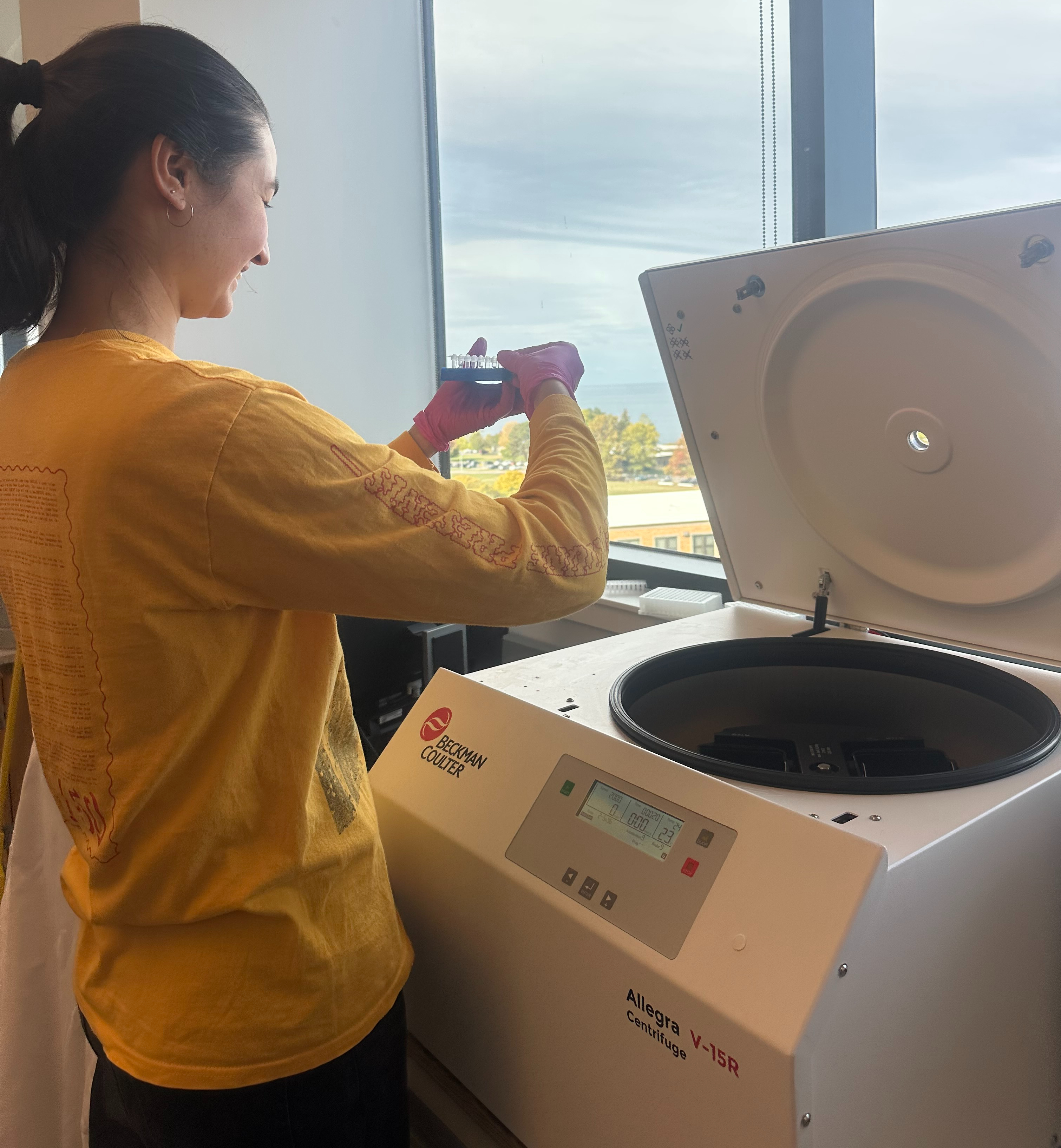
Over the summer, Chloe collected tissue samples from Brook Trout in the study area using a nonlethal method by taking small fin clippings that will regrow, much like fingernails. Over the past few weeks, she has been working with Vinnie to extract DNA from these samples and prepare them for sequencing. Both Chloe and Maggie are contributing to our understanding of fish genetics and conservation across New York State. We’re very proud to collaborate with them!